-
About
 Fidelity & Excellence
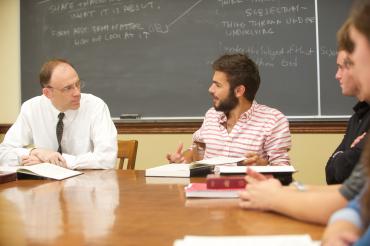
Thomas Aquinas College is unique among American colleges and universities, offering a faithfully Catholic education comprised entirely of the Great Books and classroom discussions.
-
A Liberating Education
 Truth Matters
Truth, and nothing less, sets men free; and because truth is both natural and supernatural, the College’s curriculum aims at both natural and divine wisdom.
-
A Catholic Life
 Under the Light of Faith
The intellectual tradition and moral teachings of the Catholic Church infuse the whole life of Thomas Aquinas College, illuminating the curriculum and the community alike.
-
Admission & Aid
 Is TAC Right for You?
Do you enjoy grappling with complex questions? Are you willing to engage in discussions about difficult concepts, with the truth as your ultimate goal?
-
Students & Parents
 Mind, Body & Spirit
There is always something to do at TAC — something worthwhile, something fulfilling, and something geared toward ever-greater spiritual and intellectual growth.
-
Alumni & Careers
 What Can You Do with a Liberal Education?
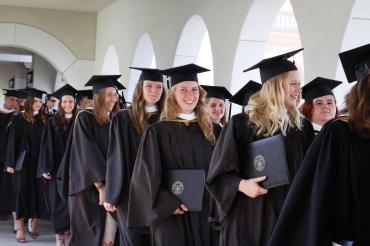
Nothing speaks more to the versatility of the College’s academic program than the good that our alumni are doing throughout the Church and the world.



Rev. Isaac Morales, O.P., Explains Biblical Symbolism in Baptism
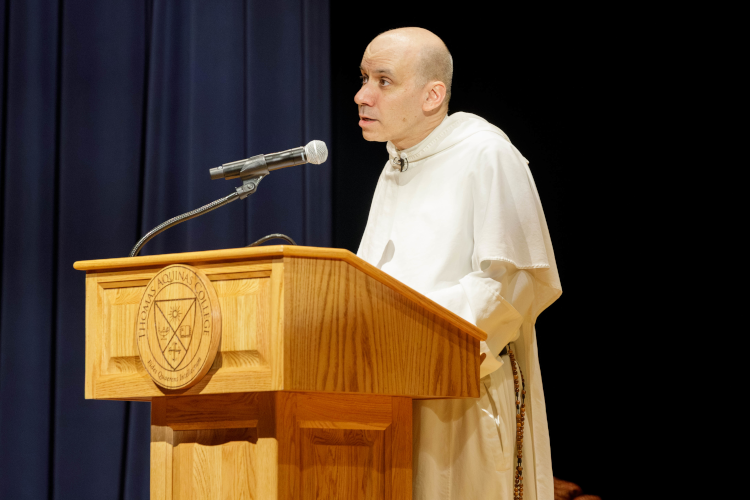
In the latest installation of the St. Vincent de Paul Lecture Series, Thomas Aquinas College, California, welcomed Rev. Isaac Morales, O.P., associate professor of theology at Providence College in Rhode Island. In his lecture, “The Bible and Baptism,” Fr. Isaac sought to highlight, through sacred Scripture, the vibrant symbolism found in the Sacrament of Baptism.
Too often, in response to Protestant critiques that isolate the symbolic nature of the sacraments, Catholic apologists tend to the other extreme, prioritizing the efficacious aspect — that which brings about a desired end — at the expense of the symbolic. “A narrow focus on the merely efficacious approach can lead us to miss out on the richness of the sacraments and what God does for us through this sacramental sign,” said Fr. Isaac.
He began his exegesis by examining water as a symbol of life, death, and purity, as seen in the Old Testament. The life-giving and strengthening nature of water, given by God, is seen clearly and abundantly throughout the Psalms and the teachings of the prophets. Conversely, water is portrayed as destructive and deadly, bringing to ruin numerous corrupt ancient regimes and civilizations. “Each one of us has a king of Tyre, or spirit of pride, within us, who needs to be destroyed by the waters of baptism, so that we can rise to new life with Christ,” Fr. Isaac stated.
Lastly, the Dominican showed how the redemptive nature of water is implicit both in the cleansing of Naaman in 2 Kings and the purification rituals throughout the Old Testament. Certain bodily functions and moral shortcomings would render a person “impure,” or unfit to enter the presence of God in the temple. Purification rituals, which included washing with water, reconciled the impure to God, making them once more fit to worship Him with a pure heart.
Moving to the New Testament, Fr. Isaac exhibited how these ideas, apparent first in the Old Testament, are more explicitly present throughout the Gospel and the letters of St. Paul. St. Paul states that baptism primarily involves union with Christ in His death and burial, seen in the imagery of the baptized person descending beneath the water, but also in His Resurrection, signified by the baptized rising up once more. As Fr. Isaac explained, this resurrection by water images two unique senses of life: both our newfound freedom from sin, and our future resurrection in the new heavens and earth. “Holy living in the present, made possible by baptism, through purification from sin, prepares the baptized for a future, glorious resurrection into eternal life.”
He concluded: “Baptism is not merely symbolic of these events and themes. It actually gives us a participation of Christ’s saving work. But the symbols provide us with a much fuller picture of the richness God lavishes upon us through a simple substance like water.”
| Receive lectures and talks via podcast! | ||||
|---|---|---|---|---|
 |
 |
 |
 |
 |