-
About
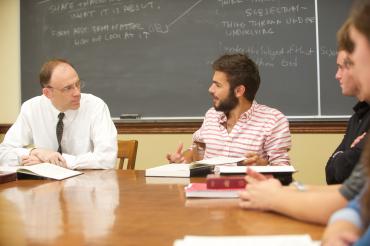 Fidelity & Excellence
Thomas Aquinas College is unique among American colleges and universities, offering a faithfully Catholic education comprised entirely of the Great Books and classroom discussions.
-
A Liberating Education
 Truth Matters
Truth, and nothing less, sets men free; and because truth is both natural and supernatural, the College’s curriculum aims at both natural and divine wisdom.
-
A Catholic Life
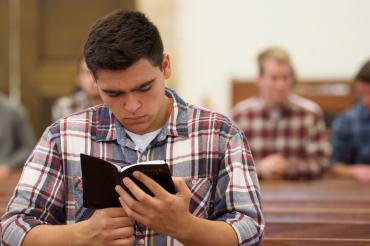 Under the Light of Faith
The intellectual tradition and moral teachings of the Catholic Church infuse the whole life of Thomas Aquinas College, illuminating the curriculum and the community alike.
-
Admission & Aid
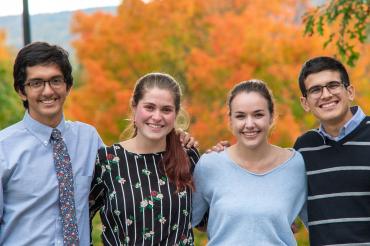 Is TAC Right for You?
Do you enjoy grappling with complex questions? Are you willing to engage in discussions about difficult concepts, with the truth as your ultimate goal?
-
Students & Parents
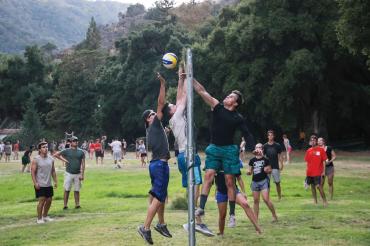 Mind, Body & Spirit
There is always something to do at TAC — something worthwhile, something fulfilling, and something geared toward ever-greater spiritual and intellectual growth.
-
Alumni & Careers
 What Can You Do with a Liberal Education?
Nothing speaks more to the versatility of the College’s academic program than the good that our alumni are doing throughout the Church and the world.


Margaret Walsh (’13) Authors New Book on Teaching Literacy
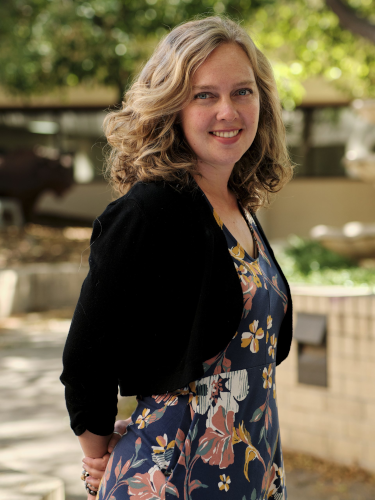 “My hope is to support parents and educators in helping their students to learn, regardless of the struggles they encounter,” says Margaret Walsh (’13), Catholic education therapist, of her first book, A Catholic Approach to Literacy for Struggling Students: Connecting Philosophy and Practice. “One in five students has a diagnosed learning disability today, which is a challenge that we face as a culture and as a people. We're not only trying to renew Catholic education throughout the country, but we also need to take into consideration students who struggle to learn and figure out how to support them.”
Published by The Catholic University of America Press, Miss Walsh’s book builds upon her 10 years of experience working with children with language-based learning disabilities. In 2015, she founded Secret Garden Educational Pathways, an organization that works with students beyond merely accommodating their disabilities, providing them instead with personalized tools and strategies to get the most out of what they are learning. She and her fellow teachers — including Suzanna Pfieffer (NE’25) — have dedicated themselves to providing student support and educator mentoring to private schools and homeschooling families nationwide, helping over 500 students in the last 10 years.
“When I first began working in special education, I saw a direct correlation between Aristotelian and Thomistic philosophy on knowledge and the soul, and the most effective research-based methodologies — and the researchers have no idea this is the case,” says Miss Walsh. She spent several years testing that theory as she worked with hundreds of students, studying peer reviews and various support strategies, while analyzing which methods worked more consistently than others and why. Over time, she found that her suspicions were correct: Methods rooted in traditional philosophy of the human person were the most effective.
“There was a need to describe what was going on in philosophical and layman’s terms instead of using confusing technical language,” she explains. “I wanted the book to be accessible to educators and parents so they can know what’s going on with the children they’re working with; not only do I give them the tools, but I also show them how to be creative when working with this part of the mind that isn’t functioning as well as it could be.”
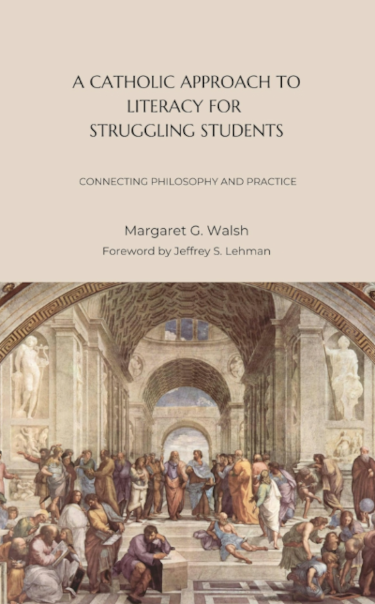 A Catholic Approach to Literacy for Struggling Students integrates modern research-based intervention methods with a philosophical understanding of the human person drawn from Aristotle and St. Thomas Aquinas. Using accessible language, the book explains how students learn to read, sharing practical guidance for building reading comprehension. Drawing on St. Thomas’s account of the faculties of the soul in the Summa Theologiae, Miss Walsh places literacy instruction within this broader philosophical and theological framework, offering a holistic approach to education ordered to the human dignity and formation of the student.
“I think it’s important to have a Catholic anthropology of who the human person is when you’re trying to help someone learn,” she says. “If you remove that piece, then you're only dealing with brain processes. But the ultimate goal of any sort of learning is to receive and possess the knowledge, which takes place when the act of understanding takes place — that’s an action within the soul, not within the brain.”
Ultimately, she hopes to give parents and educators a leg up in teaching children with learning disabilities, especially those who perceive public schools as the only option that can offer students reliable aid. Most important of all, she notes, is teaching children the Catechism, so they may know, love, and serve God.
“Catholic parents and educators have a calling to bring their students out of the darkness and into the light of knowledge so that, through natural means, they will be inspired to know God even better,” she states. “A child may not do well in math or English. But the most important class he will ever take is his Catechism class, because we have no idea how much grace God will give him to perceive the truth, even if he struggles to understand other concepts or classes. And even for individuals with much more significant learning or intellectual disabilities, there’s nothing to say that God cannot reach down and touch their souls directly.”
A Catholic Approach to Literacy for Struggling Students is currently available for purchase on The Catholic University of America Press website.