-
About
 Fidelity & Excellence
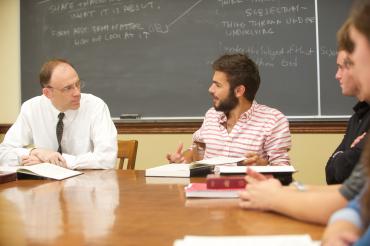
Thomas Aquinas College is unique among American colleges and universities, offering a faithfully Catholic education comprised entirely of the Great Books and classroom discussions.
-
A Liberating Education
 Truth Matters
Truth, and nothing less, sets men free; and because truth is both natural and supernatural, the College’s curriculum aims at both natural and divine wisdom.
-
A Catholic Life
 Under the Light of Faith
The intellectual tradition and moral teachings of the Catholic Church infuse the whole life of Thomas Aquinas College, illuminating the curriculum and the community alike.
-
Admission & Aid
 Is TAC Right for You?
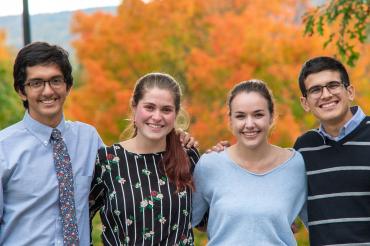
Do you enjoy grappling with complex questions? Are you willing to engage in discussions about difficult concepts, with the truth as your ultimate goal?
-
Students & Parents
 Mind, Body & Spirit
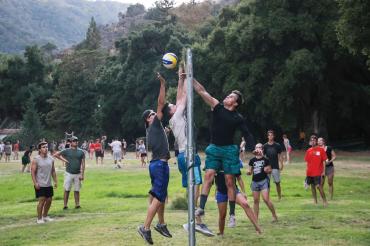
There is always something to do at TAC — something worthwhile, something fulfilling, and something geared toward ever-greater spiritual and intellectual growth.
-
Alumni & Careers
 What Can You Do with a Liberal Education?
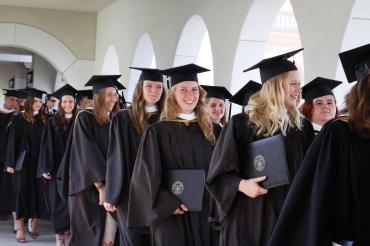
Nothing speaks more to the versatility of the College’s academic program than the good that our alumni are doing throughout the Church and the world.



Prince Albert von Thurn und Taxis Speaks on the Thomistic Account of Sin and the Will
As part of the St. Vincent de Paul Lecture and Concert Series, Prince Albert von Thurn und Taxis, visited Thomas Aquinas College, New England last month to speak on St. Thomas’s explanation of sin in the rational human will.
Prince Albert made the acquaintance of TAC alumnus Rev. Patrick Carter, O.S.B. (’05), in Rome at the Pontifical University of Saint Thomas Aquinas, and through their conversations became interested in the College’s program of Catholic liberal education. A lover of philosophy and devotee of St. Thomas, the 12th prince of Thurn and Taxis traveled to the College’s East Coast campus at the end of February to share his thoughts on sin and man’s rational nature, giving a thought-provoking talk entitled, Rational Mind and Non-Rational Agency: Aquinas’s Augustinian Account of the Sinning Will.
The Prince began his lecture with an introduction to understanding human nature, explaining that the rational being is composed of reason and will. According to both Aquinas and Augustine, “reason is supreme in the soul and distinguishes humans and their agency as rational.” The soul is both the form of the body and the primary principle of the intellect, by which man is jointly moved through his appetites. While it can be moved toward the good with the goal of happiness, the will is also moved by lower appetites and, at times, disordered goods. As Prince Albert posited: “The will necessarily desires happiness … however, it can desire different things expedient to happiness.” This defect causes the will to desire the wrong things under the guise of the good.
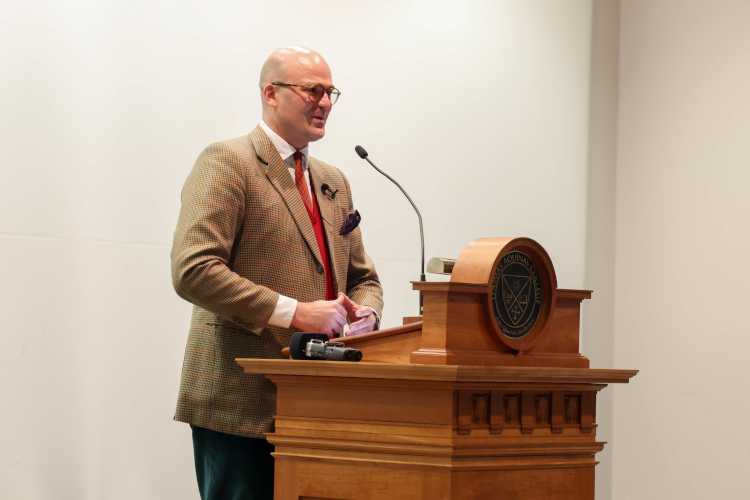
Prince Albert detailed the agency of the will, which must see the objective as both an efficient good, in order to be moved, and a final good, as directed toward happiness. It must distinguish between individual and final good, which “provides the will with its practical and moral object.” Thus, reason acts as both formal and final cause, as it presents goods to the will and determines their potential finality.
He then explored the non-rational agency of the will, by which “the will can fail to follow reason … due to the mastery the will has over its own act of willing or not willing.” In this way, it can pursue lower or disordered goods, leading it to sin. “Sinful agency constitutes a misuse of the will, which is created to do good.”
Moving to St. Thomas’s Augustinian account of sin, Prince Albert showed that evil is a deficiency of being and a privation of the good. “Evil is parasitical on the good,” he said, “and relies on the good as its subject, wherefore, paradoxically, the good qualifies as the cause of evil.” Though the will never truly desires or intends evil, it can directly cause evil if it is not directed well. “The sinning will is, therefore, rational, in a qualified sense,” he concluded, “and functionally speaking, because it acts voluntarily; but morally speaking, according to the measure of good or right reasoning, which it rejects, it is non-rational.”
As Prince Albert descended from the podium, the audience responded with long and resounding applause. Following the lecture, students and faculty enjoyed coffee and baked goods before a question-and-answer session, where Prince Albert and the audience spent the next two hours further discussing the partial non-rationality of the will, the parasitical quality of evil, the will as a rational free appetite, and many other pertinent subjects.
“The Prince has a deep understanding of St. Thomas’ treatment of Augustine,” said Levi Smail (NE’29). “It was fascinating to hear his well-researched thoughts on the matter.”
| Receive lectures and talks via podcast! | ||||
|---|---|---|---|---|
 |
 |
 |
 |
 |